
All posts by IT Admin
Brown Fat, Brown Adipose Tissue: What It Is & What It Means
Brown Fat
Brown fat (brown adipose tissue) is a type of body fat that regulates your body temperature in cold conditions. Brown fat activates right before you start to shiver. Brown fat also burns calories and stores energy. You have a small percentage of brown fat in your body compared to white fat.
What is brown fat?
Brown fat, also called brown adipose tissue, is a type of body fat that keeps you warm when you get cold. Brown fat also stores energy and helps your body burn calories. Brown fat starts working (activates) in cold temperatures.
What are the types of fat in my body?
There are different types of fat in your body. Healthcare providers identify each type of fat by its color and function, including:
- White fat: Most of the fat in your body is white fat. White fat stores energy in various places around your body. White fat insulates your organs. Too much white fat leads to obesity.
- Brown fat: Brown fat is smaller than white fat. It stores energy and burns that energy to regulate your body temperature. Brown fat helps you burn calories by creating heat right before your body starts to shiver (thermogenesis). It also helps regulate sugar (glucose) and fat metabolism.
- Beige fat: Beige fat is a combination of white and brown fat cells. These cells burn calories to regulate body temperature by converting white fat cells to brown.
What does brown fat do?
Brown fat is responsible for producing heat to warm the blood in your body. You’ll notice brown fat burning right before you start to shiver because the fat activates (turns on) in cold temperatures. It produces heat by breaking down blood sugar (glucose) and molecules of fat. This process (thermogenesis) creates heat to help you maintain your body temperature.
How does brown fat help my body?
Brown fat helps your body in different ways including:
- Maintains your body temperature.
- Produces and stores energy.
- Burns calories.
- Helps control blood sugar and insulin levels.
What does brown fat look like?
Tiny molecules make up brown fat and those molecules are fat cells. Molecules consist of fatty acids and glycerol. The anatomy of brown fat resembles muscle more than it resembles other fat in your body because the cells that store brown fat in tissues (adipocyte) are smaller.
When fat collects within your body, fat molecules lump together to create a mass. Brown fat looks like a small, brown, lumpy oval.
Why is brown fat the color brown?
Fat in your body has different colors that designate its function. Brown fat is brown because the fat cells are full of mitochondria. Mitochondria is made up of a lot of iron, which gives brown fat its color.
Where is brown fat located?
Brown fat in newborns is located in their back, neck and shoulders. During childhood and adolescence, brown fat scatters around the body. Brown fat in adults is located around the neck, kidneys, adrenal glands, heart (aorta) and chest (mediastinum).
How much brown fat is in my body?
The amount of fat in your body varies from person to person. You have less brown fat than white fat in your body.
In newborns, brown fat makes up 2% to 5% of their total body weight. During childhood and adolescence, the amount of brown fat reduces. As an adult, you have a small amount of brown fat. People who are lean, like athletes, have more brown fat in their bodies than others.
How do I get fat in my body?
You get fat from the foods you eat. Fat is essential because it produces energy. There are a lot of different foods that provide good sources of fat, including:
- Avocados.
- Nuts and seeds (cashews, chia seeds, flax seeds).
- Fish (salmon, fresh tuna).
- Yogurt.
Always combine foods that have good fat with vegetables, whole grains, protein and dairy to eat a well-balanced diet.
Foods you should avoid to prevent unhealthy fat from collecting in your body include:
- Saturated fats (processed foods, margarine, white chocolate, desserts).
- Trans fats (fried foods, frozen foods).
How do I increase the amount of brown fat cells in my body?
People might want to increase the amount of brown fat in their bodies if they want to lose weight and burn calories. You can take steps to increase the amount of brown fat in your body by:
- Lowering the temperature: Brown fat activates at colder temperatures, right before you start shivering. Some studies suggest turning down the thermostat, taking a cold shower or an ice bath could activate brown fat to help your body produce more to burn more calories.
- Adding iron to your diet: You build fat from the foods you eat. As brown fat is rich in iron, choose iron supplements or food items rich in iron, like meat and seafood, whole grains, leafy vegetables and beans, to make sure your body gets enough iron to keep your fat cells healthy.
- Eating a well-balanced diet: Nutrition is vital for your health, especially if you want to increase brown fat in your body. Research shows that some foods like apples and dried fruit contain a chemical that activates brown fat production called ursolic acid. Eat enough food to satisfy your appetite and avoid overeating or eating processed foods.
- Exercising: Staying active is a great way to maintain good health. Studies suggest that exercise activates your body’s blood hormone irisin, which tells white fat in your body to burn like brown fat. This process creates “beige fat.”
Singh SNAPSHOT
Brown fat positively influences the way your body works by maintaining your body temperature in cold conditions and producing energy. Take steps to keep the brown fat in your body healthy by eating a well-balanced diet, exercising and lowering the temperature in controlled environments by taking a cold shower or an ice bath a couple of times a week. If you’re unsure what foods or activities are right for your body, talk with a healthcare provider.
The Science Behind Cold Water Immersion Therapies
Can immersing yourself in cold be beneficial to your health?
Cold water therapy, or cold immersion, is what it sounds like: immersing yourself in cold water so that your body temperature drops.
Examples of cold immersion include:
- Cold showers or baths
- Ice baths (immersion in water between 50 and 60 °F)
- Cold pools or lakes (for swimming)
- Taking a walk outdoors in the cold
Let’s look at the health benefits of cold therapy or exposing your body to the cold.
Exposure to Cold Activates Your Immune System
Your immune system prevents you from catching cold viruses and other infections. Many people try to boost their immune systems with vitamins and supplements, but they don’t realize they could get better results by taking a walk in the cold or taking a cold bath. That’s because white blood cells, which fight infection, circulate in your body more quickly when you are exposed to cold temperatures. Exposure to cold may also help your immune system produce other infection-fighting warriors, including t-cells and antibodies.
Cold Exposure May Help Manage Stress and Depression
Stress is a natural response to any challenge. It’s our body’s way of telling us to pay attention and be prepared to deal with a situation. Stress is meant to spur action, whether that means getting out of the path of a speeding car or doing your best on an important project. Stress serves a purpose but only in small doses.
Cold Immersion Reduces Post-Workout Soreness
Who enjoys achy muscles after a workout? Unfortunately, it’s a fact of life when you first start working out or after an unusually tough exercises session. After you work your muscles in a way they’re unaccustomed to, it’s common to experience delayed onset muscle soreness. Research shows cold immersion reduces muscle soreness, which may help speed up your recovery time after a training session. The cooler temperature causes blood vessels to constrict (narrow), which reduces the swelling of tissue around the injury. The same thing happens when you apply a cold pack to an inflamed area. The cold reduces tissue swelling and pain. Cold is a natural anti-inflammatory without the side effects of anti-inflammatory medications.
Can Cold Therapy Help with Weight Loss?
Cold increases your metabolism and activates thermogenesis, in which brown fat burns calories to produce heat. This is one reason cold showers could be effective for weight loss. In addition, spending time in cold temperatures causes you to be more active because you move around more when you’re trying to warm up.
Some resources suggest that cold water therapy and cold therapy boost calorie burning. But is there any truth to this claim? Studies show that exposure to cold increases resting metabolic rate, which, in theory, could help with weight loss. However, few studies have looked at this issue, and there are other factors to consider. For example, does exposure to cold cause you to eat more and compensate for the calories you burned? It’s an intriguing area that needs more research.
How to Get Started with Cold Immersion
The best way to get started with cold therapy is to introduce yourself to cold showers. If you’re not used to cold showers, you’ll need to build up tolerance. Start by exposing your body to cold water for 10 seconds, followed by as much warm water as you want. Gradually increase the amount of time spent in the cold over a period of days or weeks, until you can commit to a full minute under an icy stream. Cold immersion is most effective when you maintain it for at least one minute, so shoot for that as your minimum target duration.
After a cold therapy session, cool down gradually. It’s never a good idea to start with extreme temperatures when first introducing your body to cold showers — this is especially true if you’re trying out an ice bath for the first time! Gradually cool the water down as your tolerance increases. This will help prevent shock and injury.
The Bottom Line
Cold water therapy and cold immersion might sound like counterintuitive advice, but it turns out that taking a dip in cold water could have unexpected health benefits. If you’ve never tried cold water therapy or cold immersion, you may want to consider it. The benefits are numerous, and the costs are low. So go ahead, get in the bathtub or shower and see what happens. Check with your healthcare provider first, though.
Fix Your Knees: The Truth About Knee Health
*Disclaimer: Consult your physician/PT before engaging in any exercises mentioned below.
Over 100 million Americans have experienced some form of knee pain, and over 1 in 4 American adults suffer from chronic knee pain.
If there was a simple way to prevent knee pain you would do it, right? Good news: there just might be.
Why Most Knee Injuries Happen
If you want to protect yourself from pain and injury, you have to strengthen all of the muscles that support your knees. Knee injuries occur when you enter vulnerable positions without support. Often, these injuries happen when your “knees go over your toes,” that is if you looked at your side profile, your knees would be in front of your ankles. This is because your knee joint has less support from your larger glute, hip, and quadricep muscles the further your knee goes.
If you think about all of the natural motions in your life, walking, going up and down the stairs, picking something up, or jumping, your knees go over your toes every day. No one wants to fear or experience pain doing the things we love, so how can we keep our knees healthy, safe, and strong? First we need to strengthen our larger muscles, then train our muscles in those vulnerable positions.
The safest knee has the strongest support: Glutes and Hips First!
Before we focus on knee-centered movements, it is essential to build strength in your glutes and hips. These larger muscles stabilize your movements to avoid those vulnerable positions. Before beginning a knees-over-toes program, start with exercises that strengthen your glutes and hips. These include squats, donkey kicks, and bridges. Once you feel confident in your bigger muscles, adding knees-over-toes exercises is a great next step to bulletproof your knees! All exercises can be done in 3 sets with the recommended number of repetitions.
- Dr. Singh’s home workout blog, can cite https://rickysinghmd.com/homeworkout/
Squats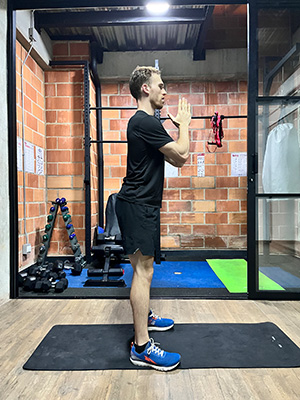
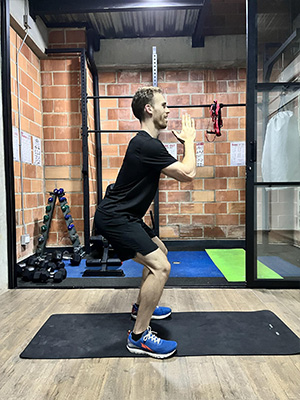
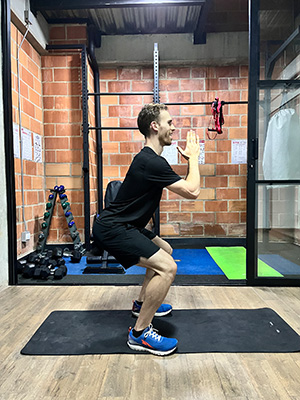
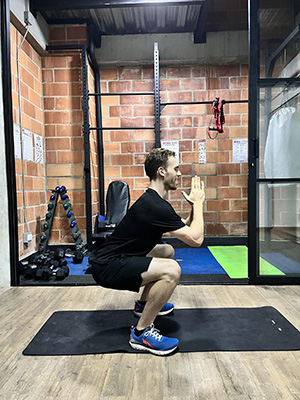
- Stand with your head facing forward and your chest held up and out.
- Place your feet shoulder-width apart or slightly wider.
- Sit back and down like you’re sitting into an imaginary chair.
- Lower down so your thighs are as parallel to the floor as possible, with your knees over your ankles.
- Pushing through your heels, stand up. Repeat 8-12 reps
Donkey Kicks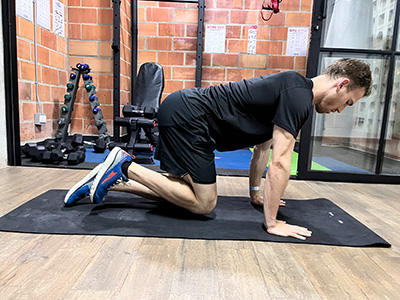
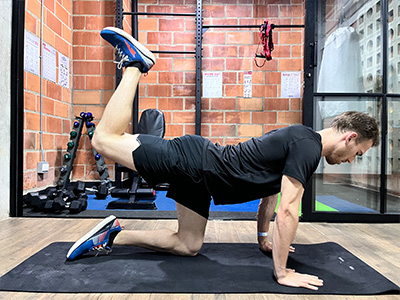
- Get down on all fours. Align your hands under your shoulders and your knees under your hips.
- Keep your right knee bent at 90 degrees and flex the foot as you lift the knee until it is level with the hip.
- Kick back with one leg and squeeze the glutes.
- Bend the knee, lower the leg, and repeat 10-15 reps
- Switch legs.
Bridges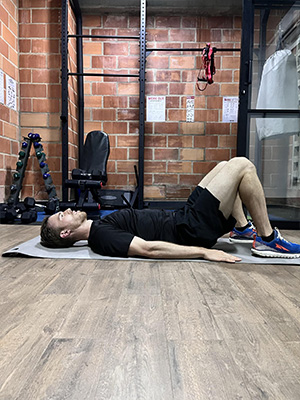
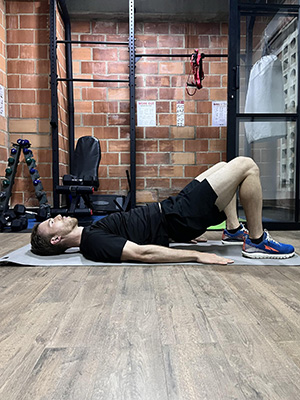
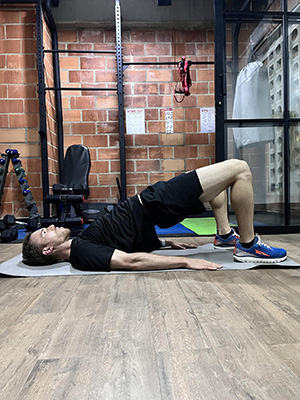
- Lie on the floor with your knees bent
- Flex your glutes and lift your pelvis until your chest and legs are in one line
- Hold the position and slowly lower down. Repeat 8-12 reps
Bulletproof Your Knees: Regressions and Progressions
Some of the following exercises may look like the very motions that make your knees hurt. Work with your physical therapist, coach, or physician before beginning your knee health journey to find your starting point. Regressions (increasing ease) and progressions (increasing difficulty) means adapting the exercises to your current level. This could mean adjusting the depth of the motion or using a tool to balance. Pain outside of the norm during any exercise is a sign to stop and reevaluate. No pain no gain does not apply here!
Knees Over Toes Exercises: 3 sets each
ATG squat (w/regression)
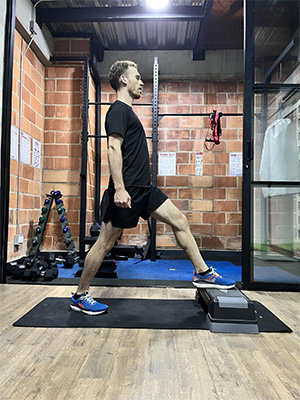
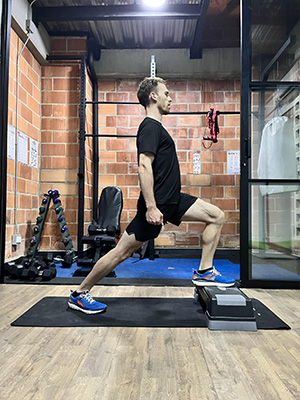
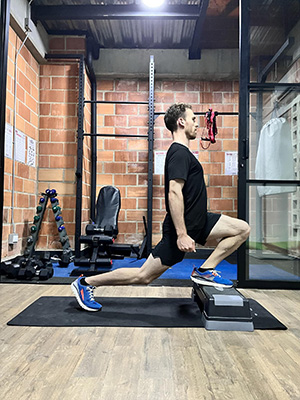
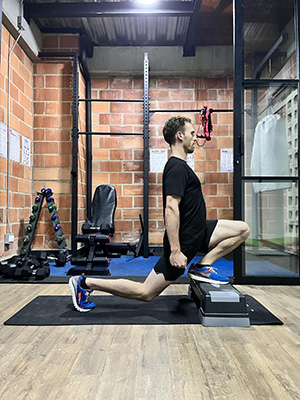
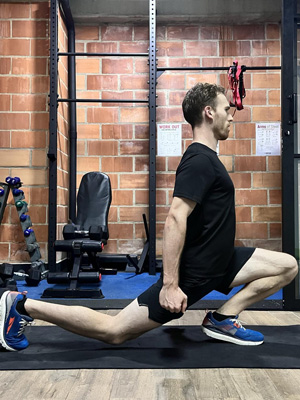
- Widen your legs preparing for a lunge (elevate your front foot to make this easier)
- Keeping your back leg straight (you will feel a hip stretch), lunge down and forward
- Drive your front knee forward and the left glute back until your hamstring meets your calf
- Hold at the bottom and slowly return up. Repeat 4-6 reps
- Regressions: Elevate the front foot and use something to hold onto for balance
Tibialis Raise
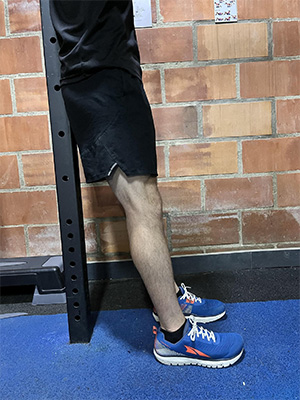
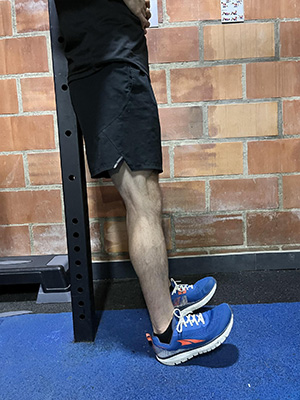
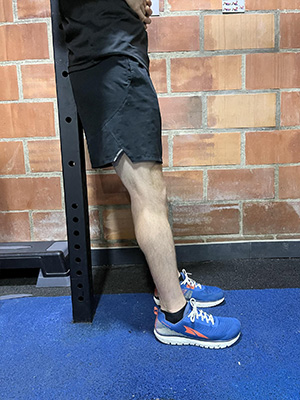
- Put your butt against the wall, and stand out a comfortable distance, with your legs straight (feet close = easier):
- WIthout bending your knees, flex your toes up. Hold for 2 second
- 2 second and hold, 20 reps
- Regressions: Bring your feet closer to the wall
Poliquin step up
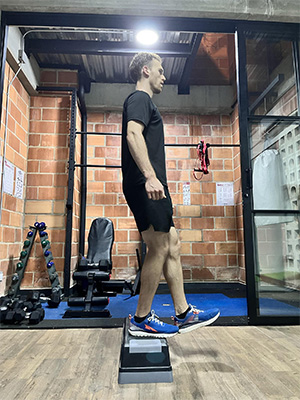
- Stand on a slightly elevated platform
- Point your hovering toes up
- Smoothly squat down, keeping your torso up
- Bend the working knee to about 30 degrees
- Pause at bottom and reverse back to start. 10-15 reps
- Regressions: Use an object to help balance
Conclusion:
Progress takes time. Have fun with these exercises. Remember this is just one part of your journey to knee health so you can keep doing the things you love
“The athlete whose knees can go farthest and strongest over his or her toes is the most protected.” – Charles Poliquin
Abs Are Made in the Kitchen
If you’re looking to get a six pack, switching up your diet is essential.
Certain foods can boost metabolism, enhance fat burning, and keep you feeling full between meals.
Meanwhile, others contribute little more than extra calories and sugar, increasing your risk of weight gain and excess body fat.

How to eat for defined abs
Surprisingly, your kitchen is a great place to start building abs. It’s important to fill your diet with lots of nutritious, whole foods, such as fruits, veggies, whole grains, healthy fats, and high-protein items.
These foods are not only high in micronutrients and antioxidants but also low in calories. Thus, they can support weight loss and increase fat burning.
However, it’s important to focus on overall fat loss rather than spot reduction, which involves targeting a specific area of your body, such as your belly, for weight loss or fat burning.
Despite the popularity of this technique in the fitness industry, studies show that spot reduction is generally ineffective.
Additionally, keep in mind that diet isn’t the only factor when it comes to getting more defined abs.
In fact, getting regular physical activity is just as crucial to burning calories and toning your muscles.
Foods to eat
Fruits and vegetables
Aside from hitting the gym, choosing the right foods can help you get abs quicker. Here are a few of the best foods to eat on an ab-building diet.
Fruits and veggies are very nutrient-dense, meaning that they’re low in calories but high in antioxidants, fiber, and an assortment of vitamins and minerals.
Whole grains
Whole grains like oats, barley, buckwheat, and quinoa can be a great addition to your diet if you’re looking to get abs.
Some research suggests that eating whole grains can reduce appetite and influence your body’s energy use, both of which can affect body composition.
Nuts and seeds
Nuts and seeds provide the perfect balance of fiber, protein, and healthy fats, all of which can be incredibly beneficial for getting abs.
Pistachios, walnuts, almonds, pecans, and Brazil nuts are all great nuts to incorporate into your diet, alongside seeds like chia, flax, pumpkin, and hemp.
Fatty fish
Fatty fish like salmon, mackerel, tuna, and sardines are packed with omega-3 fatty acids, which play a key role in heart health, brain function, inflammation, and weight control.
Foods to avoid
Besides adding healthy ab-building foods to your diet, you should avoid a few that may harm your waistline or overall health.
Here are a few items that you should limit or cut out completely if you want to get abs.
Sugar-sweetened drinks
Sugary drinks like soda, sports drinks, and juice can increase body fat and stall progress on getting abs.
Fried foods
In addition to being high in calories, fried foods like French fries, chicken strips, and mozzarella sticks are also high in trans fats.
Trans fats are produced via hydrogenation, a process that allows oils to remain solid at room temperature.
Alcohol
In moderation, an alcoholic beverage here and there can be enjoyed as part of a healthy, ab-building diet.
However, excessive drinking can harm both your health and your waistline.
Refined grains
Refined grains like white rice, bread, and pasta have been stripped of many nutrients during processing to extend shelf life and improve texture.
The bottom line
If you want to get a six pack, changing your diet is key.
Fruits, veggies, whole grains, nuts, seeds, legumes, fatty fish, and tea can all help accelerate fat burning and improve body composition.
Meanwhile, you’ll want to avoid fried foods, sugary snacks, refined grains, sugar-sweetened beverages, and excessive alcohol intake.
For best results, be sure to combine your nutritious, ab-building diet with a regular exercise routine and healthy lifestyle.
How to Make (and Keep) a New Year’s Resolution
Are you making a resolution in the new year?
Warning: More than half of all resolutions fail, but this year, they don’t have to be yours. Here’s how to identify the right resolution to improve your life, create a plan on how to reach it, and become part of the small group of people that successfully achieve their goal
Pick the Right Resolution
You’ll give yourself your best shot at success if you set a goal that’s doable — and meaningful too.

A lot of these resolutions fail because they’re not the right resolutions. And a resolution may be wrong for one of three main reasons:
- It’s a resolution created based on what someone else (or society) is telling you to change.
- It’s too vague.
- You don’t have a realistic plan for achieving your resolution.
Your goals should be smart — and SMART. That’s an acronym coined in the journal Management Review in 1981 for specific, measurable, achievable, relevant and time-bound. It may work for management, but it can also work in setting your resolutions, too.
- Specific. Your resolution should be absolutely clear. You want to have a goal: How much weight do you want to lose and at what time interval?
- Measurable. This may seem obvious if your goal is a fitness or weight loss-related one, but it’s also important if you’re trying to cut back on something, too. If, for example, you want to stop biting your nails, take pictures of your nails over time so you can track your progress in how those nails grow back out.
- Achievable. This doesn’t mean that you can’t have big stretch goals. But trying to take too big a step too fast can leave you frustrated, or affect other areas of your life to the point that your resolution takes over your life — and both you and your friends and family flail.
- Relevant. Is this a goal that really matters to you, and are you making it for the right reasons?
- Time-bound. Like “achievable,” the timeline toward reaching your goal should be realistic, too.
Create Your Plan
Your end goal won’t just magically appear. Here are ways to figure out how to get there.

Because you won’t just wake up and change your life, you not only need a plan for what to do, but also for what roadblocks you’ll come across along the way.
If you’re trying to form or break a habit, Mr. Duhigg suggested breaking down that habit into its three parts: a cue, a routine and a reward.
For example:
Bad Habit: I smoke.
Cue: I’m tired.
Routine: I smoke a cigarette.
Reward: I’m stimulated.
Way to change the behavior: Instead of smoking a cigarette, replace the stimulus with something else, like coffee.
Or if your habit affects your whole day?
Bad Habit: I don’t get enough sleep at night.
Cue: I feel like I need time to myself in the evening.
Routine: I stay up too late watching TV.
Reward: I’m entertained.
Way to change the behavior: Instead of staying up late to watch TV, carve out special time each day to spend by yourself, even if that may mean asking for help with your children or taking a break from work each day.
And be kind to yourself. We talk in much harsher tones to ourselves than we would to other people.
When resolutions run off the rails or fall apart but you still want to try again, talk to yourself like “a child who’s feeling discouraged. You wouldn’t say ‘that’s because you’re an idiot.’
You would say ‘come on you can do it.’”
Self-Esteem and Self-Compassion

One of the biggest internal struggles we face is: no matter how hard we try, no matter how successful we are, no matter how good a parent, worker, or spouse we are – it’s never enough. There is always someone richer, thinner, smarter, or more powerful, someone that makes us feel small in comparison.
So what do you do in this situation?

Consider self-esteem improvement
There are many books and articles promoting self-esteem- how to get it, raise it and keep it. We live in an exceptionally competitive culture. Social media paints our perceptions of reality and therefore we each try to feel special and above average. In fact, according to studies, being called “average” is an insult.
Of course we don’t want to suffer from low self-esteem either, so what’s the alternative?
There is another way to feel good about ourselves: self-compassion.

Self-compassion involves being kind to ourselves when we notice something about ourselves we don’t like, rather than being cold or self-critical. We, as humans, are imperfect. Self-compassion helps us feel connected to others when we fail or suffer rather than feeling separate or isolated. It also involves mindfulness — the recognition and non-judgmental acceptance of painful emotions as they arise in the present moment.
Self-compassion vs. Self-esteem.
Self-esteem refers to the degree to which we evaluate ourselves positively. It represents how much we like or value ourselves, and is often based on comparisons with others. In contrast, self-compassion is not based on positive judgments or evaluations, it is a way of relating to ourselves. People feel self-compassion because they are human beings, not because they are special and above average.
Research indicates that self-compassion offers the same benefits as self-esteem (less depression, greater happiness, etc.) without its downsides. People who receive self-compassion training report less negative emotions and take more responsibility for their actions. This suggests that – unlike self-esteem – self-compassion does not lead to blaming others in order to feel good about oneself.
Although self-compassion may seem similar to self-esteem, they are different in many ways. Self-esteem refers to our sense of self-worth, perceived value, or how much we like ourselves. In contrast to self-esteem, self-compassion is not based on self-evaluations. People feel compassion for themselves because all human beings deserve compassion and understanding, not because they possess some particular set of traits (pretty, smart, talented, and so on).

5 Tips to Foster Self Esteem:
- Question Perfectionism
- Voltaire said, “The perfect is the enemy of the good.” This is the case with self-esteem. When you can only accept perfection, you deprive yourself of the satisfaction of being “good enough.”
- Quiet Confidence
- Self-esteem is not just for extroverts! You don’t have to be the life of the party to be confident.
- Self-confidence may shine through as a calm, steady presence, or an internal willingness to risk failure to work toward a valued goal
- Exercise
- Not only is exercise physically healthy for you, but it also will keep your confidence high.
- Thirty minutes of aerobic exercise will release beta-endorphins that increase feelings of well-being, and lower levels of cortisol, which will lower your stress and anxiety.
- Eat well
- Make sure to eat foods that are healthy and will nourish your body. Eating healthy well-balanced meals will make sure you don’t feel stuffed and tired.
- Look Inward
- How you feel about yourself is the most important thing!
- Stop being too hard on yourself.
Singh Snapshot
It does take work to break the self-criticizing habits of a lifetime, but at the end of the day, you are only being asked to relax, allow life to be as it is, and open your heart to yourself. It’s easier than you might think, and it could change your life.
7 Ways to Lower Your Blood Pressure

By making these lifestyle changes, you can lower your blood pressure and reduce your risk of heart disease.
If you’ve been diagnosed with high blood pressure, you might be worried about taking medication to bring your numbers down.
Lifestyle plays an important role in treating your high blood pressure. If you successfully control your blood pressure with a healthy lifestyle, you might avoid, delay or reduce the need for medication.
Here are 7 lifestyle changes you can make to lower your blood pressure and keep it down.
1. Lose extra pounds and watch your waistline
Blood pressure often increases as weight increases. Being overweight also can cause disrupted breathing while you sleep (sleep apnea), which further raises your blood pressure.
Weight loss is one of the most effective lifestyle changes for controlling blood pressure. Losing even a small amount of weight if you’re overweight or obese can help reduce your blood pressure. In general, you may reduce your blood pressure by about 1 millimeter of mercury (mm Hg) with each kilogram (about 2.2 pounds) of weight you lose.
Besides shedding pounds, you generally should also keep an eye on your waistline. Carrying too much weight around your waist can put you at greater risk of high blood pressure.
In general:
- Men are at risk if their waist measurement is greater than 40 inches (102 centimeters).
- Women are at risk if their waist measurement is greater than 35 inches (89 centimeters).
These numbers vary among ethnic groups. Ask your doctor about a healthy waist measurement for you.

2. Exercise regularly
Regular physical activity — such as 150 minutes a week, or about 30 minutes most days of the week — can lower your blood pressure by about 5 to 8 mm Hg if you have high blood pressure. It’s important to be consistent because if you stop exercising, your blood pressure can rise again.
If you have elevated blood pressure, exercise can help you avoid developing hypertension. If you already have hypertension, regular physical activity can bring your blood pressure down to safer levels.
Some examples of aerobic exercise you may try to lower blood pressure include walking, jogging, cycling, swimming or dancing. You can also try high-intensity interval training, which involves alternating short bursts of intense activity with subsequent recovery periods of lighter activity. Strength training also can help reduce blood pressure. Aim to include strength training exercises at least two days a week. Talk to your doctor about developing an exercise program.
3. Reduce sodium in your diet
Even a small reduction in the sodium in your diet can improve your heart health and reduce blood pressure by about 5 to 6 mm Hg if you have high blood pressure.
The effect of sodium intake on blood pressure varies among groups of people. In general, limit sodium to 2,300 milligrams (mg) a day or less. However, a lower sodium intake — 1,500 mg a day or less — is ideal for most adults.
To decrease sodium in your diet, consider these tips:
- Read food labels. If possible, choose low-sodium alternatives of the foods and beverages you normally buy.
- Eat fewer processed foods. Only a small amount of sodium occurs naturally in foods. Most sodium is added during processing.
- Don’t add salt. Just 1 level teaspoon of salt has 2,300 mg of sodium. Use herbs or spices to add flavor to your food.
- Ease into it. If you don’t feel you can drastically reduce the sodium in your diet suddenly, cut back gradually. Your palate will adjust over time.
4. Limit the amount of alcohol you drink
Alcohol can be both good and bad for your health. By drinking alcohol only in moderation — generally one drink a day for women, or two a day for men — you can potentially lower your blood pressure by about 4 mm Hg. One drink equals 12 ounces of beer, five ounces of wine or 1.5 ounces of 80-proof liquor.
But that protective effect is lost if you drink too much alcohol.
Drinking more than moderate amounts of alcohol can actually raise blood pressure by several points. It can also reduce the effectiveness of blood pressure medications.
5. Quit smoking
Each cigarette you smoke increases your blood pressure for many minutes after you finish. Stopping smoking helps your blood pressure return to normal. Quitting smoking can reduce your risk of heart disease and improve your overall health. People who quit smoking may live longer than people who never quit smoking.

6. Cut back on caffeine
The role caffeine plays in blood pressure is still debated. Caffeine can raise blood pressure up to 10 mm Hg in people who rarely consume it. But people who drink coffee regularly may experience little or no effect on their blood pressure.
Although the long-term effects of caffeine on blood pressure aren’t clear, it’s possible blood pressure may slightly increase.
To see if caffeine raises your blood pressure, check your pressure within 30 minutes of drinking a caffeinated beverage. If your blood pressure increases by 5 to 10 mm Hg, you may be sensitive to the blood pressure raising effects of caffeine. Talk to your doctor about the effects of caffeine on your blood pressure.

7. Reduce your stress
Chronic stress may contribute to high blood pressure. More research is needed to determine the effects of chronic stress on blood pressure. Occasional stress also can contribute to high blood pressure if you react to stress by eating unhealthy food, drinking alcohol or smoking.
Take some time to think about what causes you to feel stressed, such as work, family, finances or illness. Once you know what’s causing your stress, consider how you can eliminate or reduce stress.
If you can’t eliminate all of your stressors, you can at least cope with them in a healthier way. Try to:
- Change your expectations. For example, plan your day and focus on your priorities. Avoid trying to do too much and learn to say no. Understand there are some things you can’t change or control, but you can focus on how you react to them.
- Focus on issues you can control and make plans to solve them. If you are having an issue at work, try talking to your manager. If you are having a conflict with your kids or spouse, take steps to resolve it.
- Avoid stress triggers. Try to avoid triggers when you can. For example, if rush-hour traffic on the way to work causes stress, try leaving earlier in the morning, or take public transportation. Avoid people who cause you stress if possible.
- Make time to relax and to do activities you enjoy. Take time each day to sit quietly and breathe deeply. Make time for enjoyable activities or hobbies in your schedule, such as taking a walk, cooking or volunteering.
- Practice gratitude. Expressing gratitude to others can help reduce your stress.

Singh Snapshot
High blood pressure affects a large proportion of the world’s population.
While drugs are one way to treat the condition, there are many other natural techniques, including eating certain foods that can help.
Controlling your blood pressure through the methods in this article may, ultimately, help you lower your risk of heart disease.
Which Is Better: Treadmill or Elliptical?

During this COVID-19 pandemic, many of us are trying to make the most of our workouts while remaining indoors. In order to improve our aerobic capacity and boost our cardio fitness, both the treadmill and elliptical machines offer safe and effective options.
Although there are similarities between both exercise machines, there are also some important differences. Treadmills allow you to walk or run on a moving belt. You can control the speed as well as the incline. With an elliptical, you place your feet on a platform and move in an ellipses, or elongated circle.
With regards to which one is better, there really isn’t a simple answer. It depends on your workout goals, physical health, and other factors. Both types of machines have their pros and cons when it comes to working out.
Read on to learn which one may be a better fit for you.
Benefits of the treadmill

CONTROL: One of the main benefits of exercising on a treadmill is the versatility you have. Whether you want to do a brisk walk or an uphill run, you have the option to dial in the exact speed and incline of your workout.
LEG STRENGTH: Running or walking on the treadmill can strengthen your leg muscles, including your quadriceps, hamstrings, and calves. A treadmill workout can also strengthen your hip flexors and glutes.
The treadmill burns 566 to 839 calories per hour (based on a 125- to 185-pound woman).
Benefits of the ellipitical

EASY ON JOINTS: Low-impact exercise typically puts less stress on your joints than high-impact exercise. This makes the elliptical a safer option if you have a musculoskeletal condition such as low-back pain, knee or hip pain, or other health conditions like arthritis or osteoporosis.
TOTAL BODY WORKOUT: Some elliptical machines have arm handles. You can push these back and forth at the same time as you move your legs. The resistance of the handles helps to work the muscles in your shoulders, chest, and back.
The elliptical burns 322 to 478 calories per hour (based on a 125- to 185-pound woman).
How to choose the machine for you

Elliptical may be a better choice because:
- it allows you to get a good cardiovascular workout without putting as much stress on your bones and joints
- it may reduce your risk for injury while you exercise
- it allows you to get both an upper and lower body workout in a shorter period of time (if the elliptical machine has arm handles)
The treadmill may be a better fit for you if:
- you aren’t prone to injuries or joint issues
- you’re looking to meet a specific goal, for example training for a 5K or 10K race
- you want to build strength in your glutes and leg muscles
How safe are treadmills and elliptical machines?
If you follow the safety guidelines, both elliptical machines and treadmills are safe to use.
When using the elliptical, focus on having good form. Keep your posture upright, and keep your core tight throughout the movement. If you’re using an elliptical at the gym, you can ask a certified personal trainer to give you a demonstration on how to use the machine safely.
Because exercising on a treadmill can put stress on your bones and joints, be sure to warm up and cool down properly before starting your workout. This can help get your muscles and joints ready to work, and lower your risk of injuries. Also stretch after your workout.
| Elliptical | Treadmill | |
| Best for training for a race | X | |
| X | Best if you have an injury | |
| X | Best for a full-body workout | |
| Best to strengthen your legs | X | |
| Best to burn more calories | X | |
| X | Best for weight loss | X |

Singh SnapShot
The treadmill and elliptical are both effective machines to help you to get a cardiovascular workout. Which machine is a better option depends on your individual needs.
If you have a musculoskeletal condition or are injury-prone, you may want to stick with the elliptical. If you want to burn a lot of calories and build up leg strength and speed, the treadmill may be a better choice.
The Link Between Weight and Back Pain
We often talk about obesity and weight loss in relation to diabetes and heart disease. But did you know, that losing weight can help resolve or prevent back pain. If you suffer from back pain, you know how frustrating and limiting it can be. What you may not know is that there is a link between back pain and your weight.
Excess weight and obesity are linked to high blood pressure, type 2 diabetes, heart disease, and stroke. It is no surprise that it also increases the risk for back pain, joint pain, and muscle strain. The lower back is particularly vulnerable to weight-related pressure.

Every extra pound in the belly = 7-10 pounds on the spine
Maintaining a healthy weight or losing weight can help ease or prevent back issues and reduces stress on other joints as well. Dropping just a few pounds can make a big difference to your back.
If you are heavier than your ideal weight, your muscles will need to work harder to perform everyday tasks. By losing weight, you are reducing the strain on your back, including the muscles, ligaments and discs.
How Much Do You Need to Lose to Get Relief?

How thin is thin enough to get back pain relief?
I recommend staying within 10 pounds of your ideal weight to keep your back healthy and pain-free.
The good news is that physical activity also helps manage back pain. In fact, exercise may be your best bet for preventing and managing chronic low back pain.
Exercise Programs for Weight Loss and Back Pain

Aerobic Activity and Back Pain
A key ingredient in nearly every type of weight loss program, aerobic activity is any motion that uses the large muscles of the body and is maintained continuously for at least 30 minutes.
Walking, and in particular, cycling, swimming, and aquatic exercise are good low and moderate impact activity choices.
Thirty minutes of aerobic activity performed five days per week is the amount generally recommended by experts for realizing health benefits
Strength, Flexibility and Back Pain
It’s well-known that strengthening and stretching trunk muscles (especially the abdominals) and muscles around the hips provides support for upright body posture and for the spine itself.
Regular practice of yoga, Pilates or other mind-body workouts can help you do just that.
Singh Snapshot
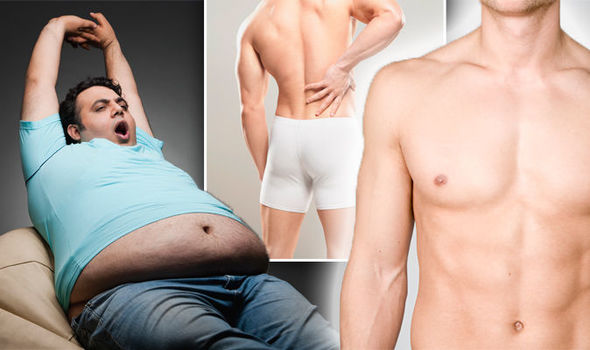
Weight gain can lead to lower back pain by compressing the lumbar spine in the lower back, which often results in a pinched nerve that leads to pain and other symptoms. People who are overweight and currently experiencing lower back pain may find that weight loss achieved by exercising regularly and healthy eating habits, may relieve some of the lower back pain.
Exercising improperly or too vigorously may irritate the pinched nerve in the lower back, causing the lower back pain you are experiencing to increase.
REMEMBER: For every pound you lose of belly fat, your back will feel 7-10 pounds lighter!
The Diet Soda Misconception

There are many people that believe obesity is largely caused by calories in versus calories out. We have previously discussed the notion that a calorie is not a calorie and therefore we must look at the macronutrients such as carbohydrates to better understand obesity and weight gain.
In addition rather than simply looking at carbohydrates, evidence has shown that it is actually insulin levels that may be the fundamental culprit in weight gain. So perhaps, it is not the sugar and carbohydrates that we previously focused so much attention on.
By now most of us are aware of how much refined sugar most sodas contain. One 20oz bottle of regular soda has 240 calories, but more frightening is 65g of sugar carbs. Logic tells us we should switch to diet sodas that have less calories and less sugar in the hopes of losing weight.
But I have bad news… The scientific evidence suggests otherwise!

What is insulin and how does it affect body weight
Insulin is a hormone that is released by your pancreas in response to ingested carbohydrates such as rice, bread and other sugars. Carbohydrates are then broken down into glucose (blood sugar) and insulin quickly acts to move this glucose from circulation into our cells. Some of this glucose is also then stored as fat. By constantly eating carbohydrates with a high sugar diet, our body constantly pumps out insulin which leads to a condition known as hyperinsulinemia.

Artificial Sweeteners Raise Insulin Levels
Many of us like to focus on short-term weight loss by controlling how many calories we take in. We try caloric restriction, intermittent fasting, low-carb diet and other strategies to decrease our calories. In doing so, we often miss the big pictur. In order to effectively manage our weight on a long-term basis we must focus our attention on controlling insulin levels.
While it is true that diet sodas do contain less calories and less sugar than their sugary counterparts, artificial sweeteners are not as benign as you may think. Artificial sweeteners may have little effect on blood sugar and blood glucose, but aspartame (key component in Coke Zero) has been shown to raise insulin levels even higher than regular sugar.

Artificial Sweeteners Make you Hungry
Sugar is perhaps one of the most addicting substances on the planet. Science has shown the brain’s response to sugar may be even stronger than its response to narcotics and other controlled substances. One way we try to satisfy this craving is to ingest artificial sweeteners but in reality it has the opposite effect. When you eat something sweet that does not have any calories your brain triggers an incomplete sense of reward. This this will then cause you to seek other sweet foods to fulfill this sugary desire.
What Health Risks are Associated with Artificial Sweeteners?
According to one study, consumption of artificial sweeteners might actually contribute to:
- Obesity
- Type 2 Diabetes
- Cardiovascular Disease
- Increased Appetite
- Risk for Some Cancers
Singh Snapshot
- Eating too many carbs does not cause obesity. In fact it is obesity that forces you to consume more carbohydrates, because of hyperinsulinemia.
- While artificial sweeteners contain no carbohydrates or calories they do increase your insulin, causing you to crave more sweets.
- Studies have shown that the consumption of artificial sweeteners may cause obesity, type 2 diabetes, heart disease, and increase the risk for some cancers.